If the last several years of design were defined by minimalism, stark white interiors, and “Instagram-perfect” spaces, 2026 is shaping up to be something very different.
This year’s biggest design trends are warmer, more personal, and far more focused on how a home feels—not just how it photographs.
Homeowners are moving away from spaces that look like showrooms and toward interiors that feel layered, collected, comfortable, and deeply livable. Designers are seeing a major shift toward authenticity, craftsmanship, texture, and emotional connection within the home.
Here are the design trends leading the way in 2026.
Warm, Earthy Color Palettes Replace Cool Grays
For years, cool grays dominated interiors. In 2026, warmer tones are taking over.
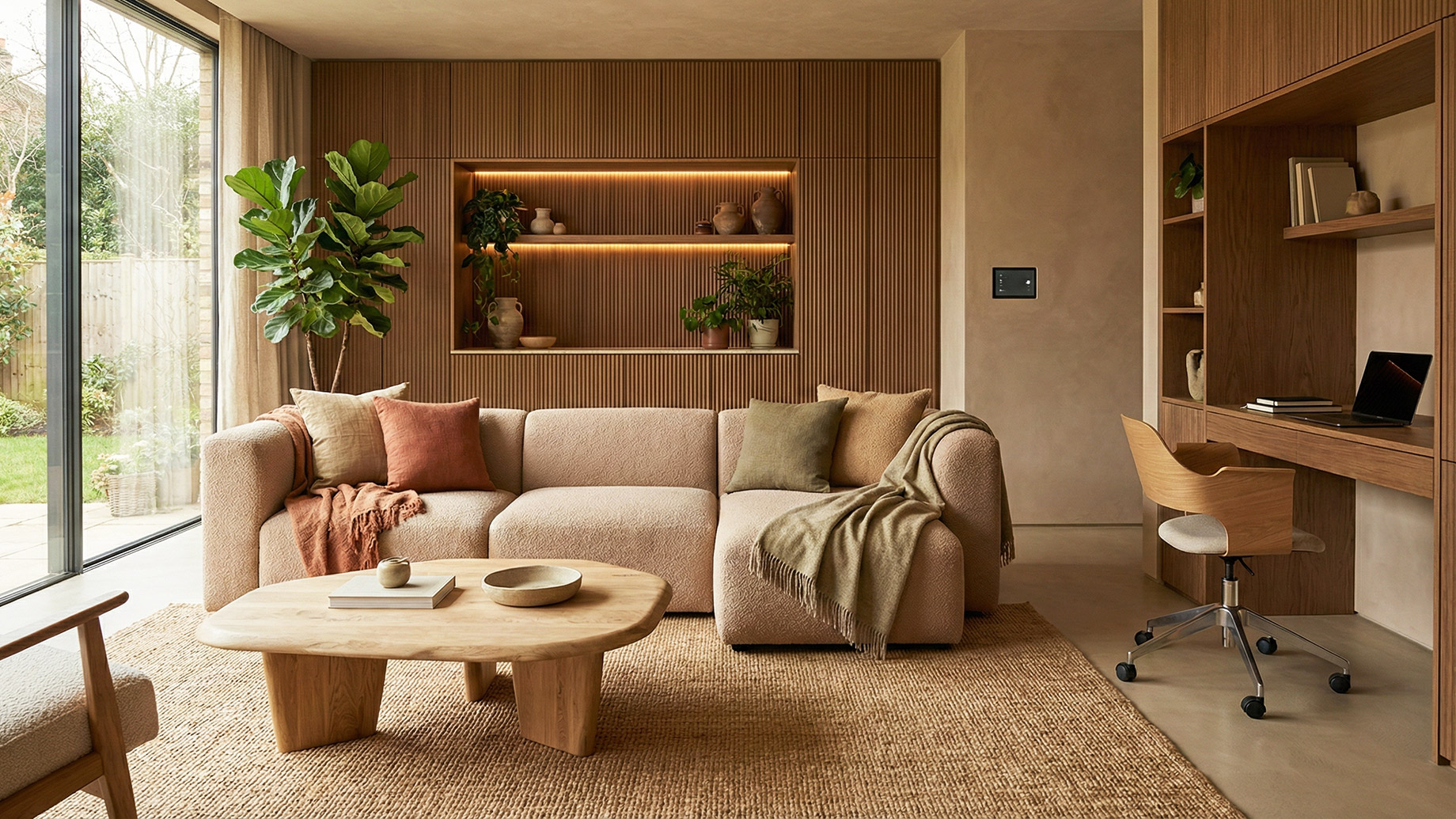
Terracotta, chocolate brown, olive green, burgundy, clay, deep blue-greens, and nature-inspired neutrals are becoming increasingly popular. Even brighter colors are appearing in richer, moodier forms that feel sophisticated rather than overly trendy.
The shift reflects a broader desire for homes that feel calming, grounded, and inviting.
Homes Are Becoming More Layered and Personal
Perfectly matched furniture sets and ultra-minimal interiors are losing favor. Instead, homeowners are embracing spaces that feel curated over time.
Vintage furniture, collected artwork, mixed textures, heirloom-inspired décor, and handmade elements are becoming central to modern interiors. Designers are increasingly blending older pieces with newer design to create homes that feel unique and lived-in rather than overly staged.
The result is a home that tells a story instead of simply following a trend.
“Grandma Chic” Is Quietly Taking Over
One of the more surprising trends of 2026 is the return of traditional details with a softer, more modern interpretation.
Pleated lampshades, floral patterns, skirted furniture, wallpaper, antique-inspired lighting, and vintage fabrics are making a comeback in updated ways. Designers are referring to the trend as “Grandma Chic,” but today’s version feels elegant rather than outdated.
After years of stark minimalism, many homeowners are craving warmth, softness, and familiarity.
Wellness-Focused Design Is Growing Rapidly
Homes are increasingly being designed around physical and mental well-being.
Natural light, air flow, quieter spaces, spa-inspired bathrooms, calming color palettes, and functional outdoor living areas are becoming priorities for homeowners. There is also growing interest in aging-in-place features, including curbless showers, wider walkways, and more accessible layouts.
Design is no longer just about appearance—it is about how a space supports daily life.
Natural Materials Continue to Dominate
Wood, stone, linen, plaster, clay, woven textures, and handcrafted finishes remain some of the most sought-after design elements.
Homeowners are gravitating toward materials that feel authentic and age gracefully over time. Warm woods with visible grain and patina are especially popular as people move away from overly polished, synthetic-looking finishes.
Texture is becoming just as important as color.
Outdoor Spaces Are Being Treated Like Interior Rooms
Patios, porches, balconies, and backyards are increasingly designed as extensions of the home itself.
Rather than overly themed outdoor spaces, designers are favoring natural materials, subtle patterns, warmer palettes, and furnishings that feel refined and comfortable. The goal is to create outdoor areas that feel relaxing and cohesive with the interior design of the home.
Outdoor living is no longer considered a bonus feature—it is becoming an expectation.
Statement Lighting Is Bigger Than Ever
Lighting is evolving beyond function and becoming a major design focal point.
Oversized pendants, sculptural fixtures, layered lighting, and dramatic accent pieces are increasingly defining the personality of a room. Designers are using lighting to create mood, texture, and visual architecture throughout the home.
In many homes, lighting is becoming the jewelry of the space.
The Era of “Perfect” Design Is Fading
Perhaps the biggest design trend of 2026 is the move away from perfection itself.
Overly coordinated interiors and trend-heavy spaces are beginning to feel dated. Instead, homeowners want homes that feel authentic, comfortable, and reflective of their personality.
The future of design is less about copying what everyone else is doing and more about creating spaces that genuinely feel like home.
And honestly, that may be the best trend yet.