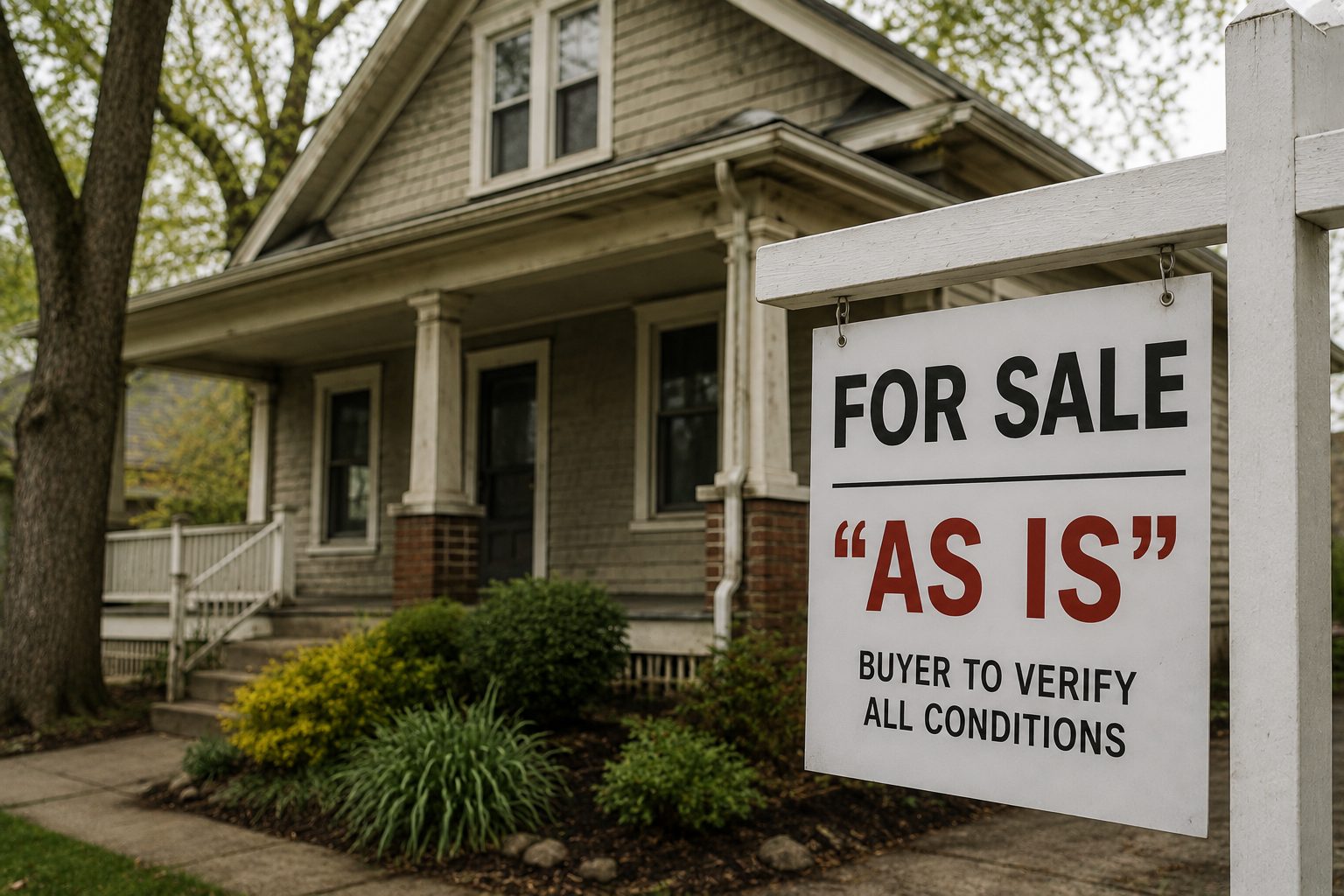
You’ve probably seen the phrase “as is” on a real estate listing. Most people assume it simply means the seller isn’t going to make repairs. In Ohio, however, buying a property as is can have more significant implications.A recent Ohio court case provides a good example.
A 108-Year-Old House and a Lawsuit
In Pascoe v. Detke, decided by Ohio’s Eighth District Court of Appeals in May 2026, buyers purchased a 108-year-old home in Lakewood for $408,000.
Before purchasing, the buyers had the home professionally inspected. The inspection identified concerns including an aging roof and older plumbing. The buyers negotiated with the seller, the roof was replaced, and they moved forward with the purchase. Importantly, the purchase agreement also contained an “as-is” clause.
More than a year after closing, the buyers experienced a water leak and later discovered additional plumbing and heating problems. They eventually sued the seller and also brought claims against the listing agent and brokerage.
The court ultimately ruled against the buyers. Among the reasons: they had an opportunity to inspect the property, actually had an inspection performed, negotiated over some of the conditions discovered and still agreed to purchase the property as is.
What Does “As Is” Really Mean?
Ohio courts have long applied the concept of caveat emptor, or “buyer beware,” to real estate transactions. Generally, buyers may have difficulty holding a seller responsible for a condition when it was observable or discoverable through a reasonable inspection, they had an opportunity to examine the property, and there was no fraud by the seller.
An as-is provision can place even more responsibility on the buyer to determine the property’s condition before purchasing it. That’s why buying as is shouldn’t mean skipping an inspection. In many ways, the more responsibility you’re accepting for a property’s condition, the more important your due diligence becomes.
But “As Is” Doesn’t Mean a Seller Can Hide Problems
This is an important distinction. An as-is clause isn’t permission for a seller to lie about or intentionally conceal a known problem.
For example, suppose an inspector tells a buyer that a 25-year-old furnace is functioning but near the end of its expected life. The buyer purchases the home as is, and three months later the furnace stops working. That’s very different from a seller knowing the furnace has a serious problem, concealing it and falsely telling the buyer it has always worked perfectly.
Ohio’s residential disclosure requirements also still apply to most residential transactions. An as-is clause and the Residential Property Disclosure Form serve different purposes: the disclosure addresses certain conditions the seller actually knows about, while the as-is provision addresses the condition in which the buyer agrees to accept the property.
“As Is” Doesn’t Necessarily Mean “Don’t Buy It”
There are plenty of legitimate reasons a property might be sold as is. An estate may know very little about the house. An investor may have never occupied it. Or a seller may simply want certainty and doesn’t want to renegotiate over every item that appears on an inspection report.
The important question for buyers isn’t simply whether a property is being sold as is. It’s what am I agreeing to accept?
A buyer can also agree to purchase a property as is while still having it inspected. The inspection can be used to determine whether the buyer wants to proceed rather than as a tool to create a repair list for the seller. The Pascoe case demonstrates why that due diligence matters. The buyers’ inspection had already raised concerns about some of the components that later became part of their lawsuit.
The Bottom Line
“As is” is one of those real estate phrases that sounds simpler than it really is. For sellers, it can provide meaningful protection by establishing that the buyer is accepting responsibility for the property’s condition. For buyers, it makes careful inspections and due diligence particularly important.
But it doesn’t give a seller permission to lie, misrepresent a property’s condition or intentionally conceal a known problem.
Perhaps the easiest way to remember it is:
“As is” can shift the risk of the property’s condition to the buyer. It doesn’t shift the truth.
This article is for general informational purposes only and isn’t intended as legal advice. Buyers and sellers with questions about their specific circumstances should consult a qualified Ohio attorney.